

Wedge Wire Curved Screen vs Flat Screen Which Is Better for Wastewater Filtration
In industrial wastewater treatment systems, selecting the right screening equipment directly affects filtration efficiency, maintenance costs, and system reliability. Among the most commonly used static screening solutions are wedge wire curved screens and wedge wire flat screens.
Although both are manufactured from stainless steel wedge wire and designed for solid-liquid separation, their structure, hydraulic performance, and operating characteristics differ significantly.
What Is a Wedge Wire Curved Screen?
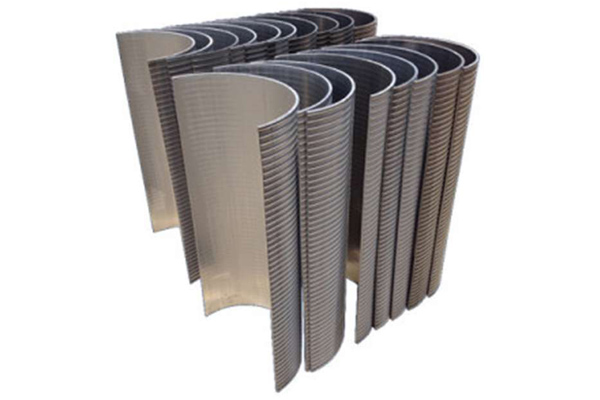
Wedge wire curved screens — also known as sieve bends, DSM screens, side hill screens, or gravity screens — use a curved concave surface to separate solids from liquids through gravity flow.
As wastewater flows across the curved screen surface, the V-shaped wedge wire profile continuously slices away water while solids move downward along the screen face. This design improves dewatering efficiency and provides excellent self-cleaning performance.
Curved screens are widely used in:
Wastewater treatment
Food processing
Pulp and paper plants
Mining and coal preparation
Corn wet milling
What Is a Wedge Wire Flat Screen?
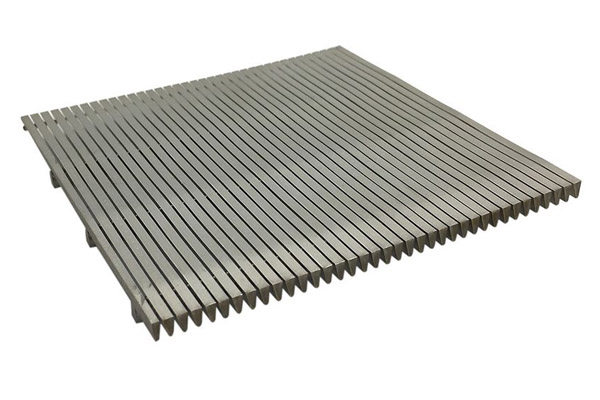
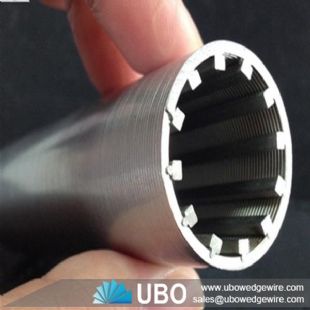
A wedge wire flat screen is a rigid flat-panel filtration system made by welding V-shaped profile wires onto support rods.
Unlike curved screens, wastewater flows directly onto or through the flat panel surface. Solids accumulate on the screen surface and are removed either manually or through mechanical cleaning systems.
Flat screens are commonly used in:
Compact filtration systems
Channel installations
Pretreatment systems
Mechanical screening equipment
Key Differences Between Curved and Flat Screens
|
Feature |
Curved Screen |
Flat Screen |
|
Flow Capacity |
High |
Moderate |
|
Self-Cleaning |
Excellent |
Fair |
|
Energy Consumption |
Very Low |
Moderate |
|
Maintenance |
Low |
Higher |
|
Installation Space |
Requires vertical drop |
Compact layout |
|
Moving Parts |
None |
Often required |
|
Best Application |
High-flow wastewater |
Narrow channel systems |
Why Curved Screens Perform Better in High-Flow Wastewater Systems
Curved wedge wire screens generally provide higher hydraulic throughput than flat screens. The curved design increases gravitational and shearing forces, allowing water to pass through the slot openings more efficiently while reducing solid accumulation.
Because curved screens operate entirely through gravity flow, they require no motors, vibration systems, or mechanical scrapers. This significantly reduces energy consumption and maintenance requirements.
In wastewater streams containing fibrous solids or sludge, curved screens also offer superior anti-clogging performance due to the continuous self-cleaning action of the wedge wire profile.
When Flat Screens Are the Better Choice
Although curved screens provide excellent filtration efficiency, flat screens are often preferred when installation space is limited.
In narrow channels or retrofit projects, flat screens fit more easily into existing systems and can be integrated with automated scraping or brushing equipment.
Flat screens are also suitable for:
Coarse screening
Controlled flow systems
Mechanical filtration units
Applications requiring compact layouts
Common Problems and Solutions
Curved Screen Overflow
Excessive solids loading may reduce drainage efficiency and cause overflow conditions.
Solution:
Optimize screen angle and increase screen surface area for higher flow conditions.
Flat Screen Clogging
Fine particles and sludge may accumulate on flat screen surfaces over time.
Solution:
Use automated cleaning systems or select larger slot openings to reduce blockage.
Uneven Flow Distribution
Improper installation or hydraulic imbalance can reduce screening efficiency in both systems.
Solution:
Ensure uniform wastewater distribution across the screen surface.
Which Screen Should You Choose?
Choose a curved wedge wire screen if:
You require continuous gravity-fed operation
High flow capacity is important
Low maintenance is a priority
Wastewater contains fibrous or high-solid materials
Choose a flat wedge wire screen if:
Installation space is limited
You are retrofitting an existing channel
Mechanical cleaning systems are required
Compact system design is preferred
FAQ
Which screen has better self-cleaning performance?
Curved wedge wire screens generally provide better self-cleaning capability due to gravity-assisted flow across the curved surface.
Are curved screens suitable for high-solid wastewater?
Yes. Curved screens are widely used in municipal and industrial wastewater systems with high suspended solids.
Do flat screens require more maintenance?
In many applications, yes. Flat screens often rely on mechanical cleaning systems that require regular inspection and maintenance.
Which screen is more energy-efficient?
Curved screens are typically more energy-efficient because they operate without motors or moving parts.
Both wedge wire curved screens and flat screens offer reliable solid-liquid separation for wastewater treatment systems. However, curved screens generally provide higher flow capacity, better self-cleaning performance, and lower maintenance requirements for high-flow industrial applications.
Flat screens remain a practical solution for compact installations and mechanically assisted filtration systems where space limitations are a major consideration.
You may also be interested in the following product(s)
Compare Products
You have no items to compare.