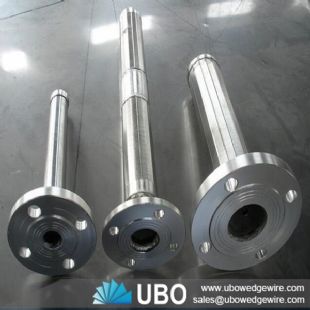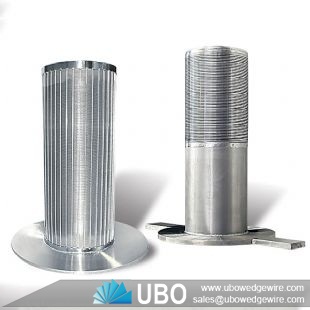

What Is Wedge Wire Screen Resin Trap
Welcome to Hebei YUBO Filtration Equipment Co.,Ltd.
In industrial water treatment systems, preventing the loss of expensive filter media is essential for maintaining stable operation and reducing maintenance costs. One important component designed for this purpose is the wedge wire screen resin trap.
A wedge wire resin trap is widely used in softeners, demineralizers, carbon filters, and other media-based filtration systems to capture resin beads or filter media before they move downstream and damage equipment.
The assembly usually consists of:
A wedge wire screen element
A protective housing
A flange connection for installation
Most resin trap screens are manufactured with one closed end and one flanged end, allowing fast and secure installation into piping systems or filter vessels.
Depending on system requirements, resin trap screens can be designed for:
Flow-In-To-Out (FITO)
Flow-Out-To-In (FOTI)
The slot opening size is customized according to the size of the resin or media being retained.
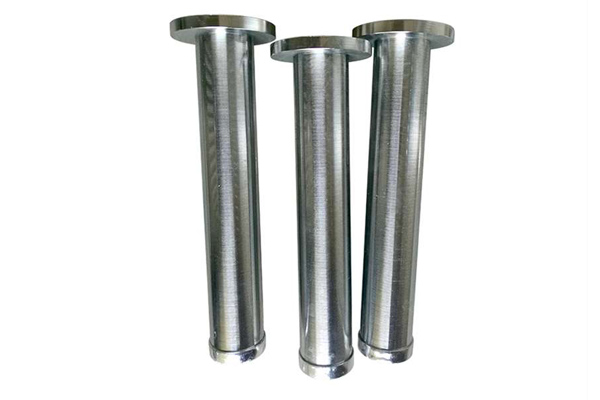
How Does a Resin Trap Screen Work?
Resin trap screens are typically installed near the outlet of water treatment systems. Their main function is to prevent valuable filter media from escaping when internal components fail or abnormal flow conditions occur.
The wedge wire screen contains continuous slot openings that allow water to flow freely while stopping resin particles or media from passing through.
If resin leakage occurs, the screen captures the escaping material before it enters downstream equipment or pipelines. In many systems, the trapped media can later be removed automatically through backflushing or pressure differential cleaning.
This protection is especially important in systems where temperature changes or backwash cycles may accidentally flush resin out of the vessel.
Why Wedge Wire Screens Are Used for Resin Traps
Compared with perforated metal or conventional mesh filters, wedge wire screens provide several important advantages for resin trapping applications.
Continuous Slot Design
The continuous slot structure creates a smooth filtering surface with excellent flow distribution. This design helps reduce clogging while maintaining efficient filtration performance.
High Open Area
Wedge wire screens provide a large open area, allowing higher flow rates with minimal pressure loss. This improves system efficiency and helps maintain stable operation.
Non-Clogging Performance
The V-shaped profile wire design reduces particle buildup and allows easier cleaning during backflushing operations.
Corrosion Resistance
Most resin trap screens are manufactured from stainless steel materials such as 304 or 316L, providing strong corrosion resistance in water treatment environments.
Long Service Life
Because of their welded construction and durable materials, wedge wire resin traps offer excellent mechanical strength and long operational life.
Easy Installation and Replacement
The flange connection design allows quick installation and convenient maintenance when replacement is required.
Main Features of Wedge Wire Resin Trap Screens
Key Features Include:
Continuous and uniform slot openings
Smooth screen surface
High filtration efficiency
Low pressure drop
Excellent backflush cleaning capability
Strong welded construction
Corrosion and rust resistance
Custom slot sizes available
Suitable for automatic cleaning systems
These features make wedge wire resin traps a reliable solution for both industrial and municipal water treatment systems.
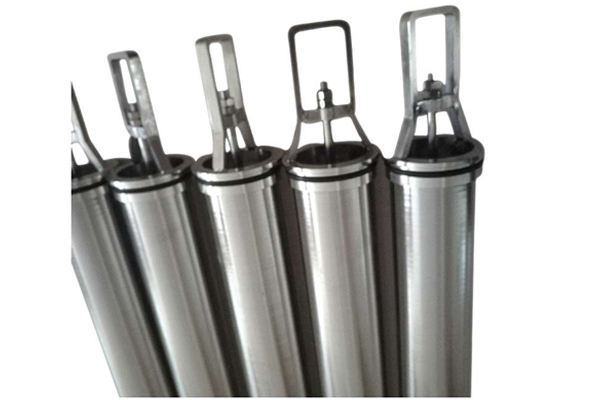
Common Applications of Resin Trap Screens
Wedge wire resin trap screens are widely used in media-based filtration and ion exchange systems.
Typical applications include:
Water softeners
Demineralizers
Dealkalizers
Condensate polishers
Carbon filtration systems
Sand filters
Portable DI tanks
Greensand filters
Multi-media filtration systems
They are commonly installed in the product water line or backwash line to prevent accidental media loss.
Importance of Resin Trap Protection
Ion exchange resin and specialty filtration media can be expensive to replace. If resin escapes into downstream equipment, it may cause:
Valve damage
Pump blockage
Reduced filtration performance
Increased maintenance costs
Unplanned downtime
Installing a properly designed resin trap screen helps protect both equipment and operating efficiency.
In many industrial systems, a resin trap acts as a low-cost safety component that prevents much larger operational losses.
Choosing the Right Resin Trap Screen
Several factors should be considered when selecting a wedge wire resin trap:
Important considerations include:
Resin or media particle size
Required slot opening
Flow rate
Operating pressure
Installation type
Corrosion conditions
Cleaning method
Housing material
Custom manufacturing allows the resin trap to match the exact requirements of the filtration system.
FAQ About Wedge Wire Screen Resin Traps
What happens if a resin trap is not installed?
Without a resin trap, ion exchange resin or filtration media may enter downstream pipelines and equipment during system failure or backwash cycles. This can lead to equipment damage, contamination, and costly maintenance.
How do I determine the correct slot size for a resin trap screen?
The slot opening should usually be smaller than the minimum resin or media particle size. Proper slot selection helps prevent media loss while maintaining sufficient flow capacity.
Can wedge wire resin traps handle high flow rates?
Yes. The high open area design of wedge wire screens allows them to support large flow volumes while maintaining low pressure drop.
Are resin trap screens suitable for corrosive environments?
Yes. Stainless steel wedge wire screens offer excellent corrosion resistance and are widely used in chemical processing and industrial water treatment applications.
How are wedge wire resin traps cleaned?
Most systems use backflushing or pressure differential cleaning to remove trapped particles and restore flow efficiency.
What is the difference between FITO and FOTI flow design?
FITO (Flow-In-To-Out): Fluid flows from inside the screen outward.
FOTI (Flow-Out-To-In): Fluid flows from outside the screen inward.
The correct design depends on the filtration system configuration and cleaning requirements.
Can resin trap screens be customized?
Yes. Manufacturers can customize:
Slot opening size
Screen diameter
Length
Flange type
Material grade
Flow direction
Housing structure
This ensures compatibility with different industrial filtration systems.
Who We Are?
YUBO Company is the professional supplier in China. It is always committed to study, design and produce wedge wire screen products for industry filter.Now its products include wedge wire screen panel, filter nozzle, cylinder,basket,pipe, Sieve Bend Screen,Profile Screen Laterals,etc.
What Is wedge wire screen
Wedge Wire Screens is a sieve made from looped wires formed into a deep wedge-shaped section. The wedge wire screens can be supplied in various shapes and forms as FLAT PANELS, CURVED SIEVE BENDS, CONICAL BASKETS, CYLINDERS, TROUGHS DISKS either in one one piece or in segments.
our advantages
- Professtional, we have our Engineering designers
- We are the factory
- Quality is our cluture and soul
- Customized. We produce and design according to your need
- Low cost and high efficient
Compare Products